


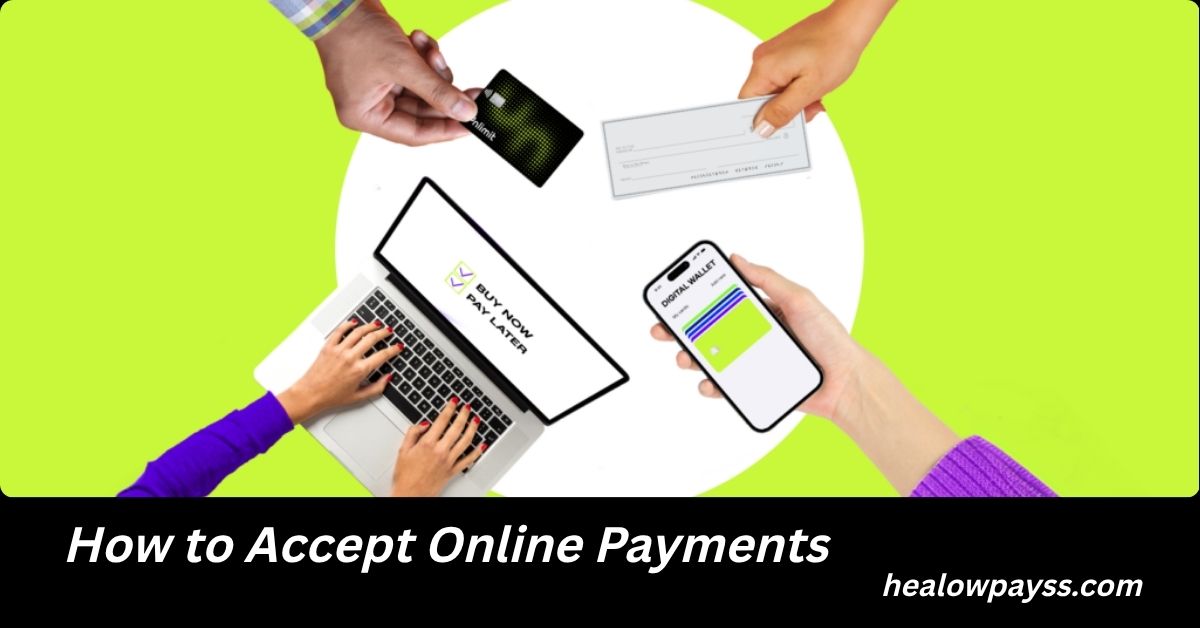
In today’s digital economy, learning how to accept online payments is one of the most important steps for any business. Whether you run an eCommerce store, a service-based company, a subscription business, or a freelance operation, customers expect fast, secure, and convenient payment options.
The way people shop has changed dramatically. Consumers no longer want to mail checks, make phone payments, or visit physical locations. Instead, they expect to pay instantly using credit cards, debit cards, digital wallets, bank transfers, and mobile payment methods.
Businesses that fail to offer convenient online payment options often lose sales to competitors that provide a smoother checkout experience.
This comprehensive guide explains how to accept online payments, the tools you need, the costs involved, security requirements, best practices, and strategies to maximize conversions while protecting your customers.
What Does It Mean to Accept Online Payments?
Accepting online payments means allowing customers to pay for products or services through the internet.
When a customer purchases something online, payment information travels through a secure system that verifies funds, approves the transaction, and transfers money into the business owner’s account.
The process may seem simple from the customer’s perspective, but several technologies work together behind the scenes.
The common ways to accept online payments involve:
- Payment processors
- Merchant accounts
- Payment gateways
- Digital wallets
- Bank transfer systems
- Buy Now Pay Later services
These components often work together to complete a secure transaction.

Why Accepting Online Payments Is Essential
Businesses that understand how to accept online payments gain significant advantages.
Increased Sales
Customers are more likely to complete purchases when multiple payment options are available.
Better Customer Experience
Fast and convenient checkout processes improve satisfaction and encourage repeat business.
Global Reach
Online payments allow businesses to sell products and services beyond local markets.
Faster Cash Flow
Electronic payments typically arrive faster than traditional payment methods.
Improved Business Operations
Automated payment systems reduce manual work and administrative tasks.
Greater Customer Trust
Secure payment systems help build confidence and credibility.
How Online Payment Processing Works
Understanding the payment process helps businesses make smarter decisions.
When a customer submits payment information, the following steps occur:
Also Read: How to Use Visa Gift Card Online for Partial Payment: The Complete Guide for Smart Online Shoppers
Step 1: Customer Initiates Payment
The customer enters card details or chooses a digital wallet.
Step 2: Payment Gateway Encrypts Data
The payment gateway securely transmits information.
Step 3: Payment Processor Communicates with Banks
The processor checks whether sufficient funds are available.
Step 4: Authorization
The issuing bank approves or declines the transaction.
Step 5: Payment Confirmation
The customer receives confirmation.
Step 6: Settlement
Funds move into the merchant account and eventually into the business bank account.
This process usually takes only a few seconds.
The Main Components Needed to Accept Online Payments
Many business owners search for how to accept online payments without fully understanding the required components.
Let’s examine each one.
Payment Gateway
A payment gateway acts as the secure bridge between the customer and the payment processor.
Its responsibilities include:
- Encrypting payment information
- Preventing fraud
- Securely transmitting data
- Ensuring compliance standards
Without a payment gateway, sensitive financial information could be exposed.
Payment Processor
The payment processor handles communication between financial institutions.
Its role includes:
- Processing transactions
- Verifying funds
- Approving payments
- Managing settlements
The processor serves as the engine behind every transaction.
Merchant Account
A merchant account temporarily holds customer funds before transferring them into a business bank account.
Many modern providers combine merchant accounts and payment processing into one solution.
Business Bank Account
The final destination for your revenue is your business bank account.
After settlement, funds are deposited there for use.
Types of Online Payments Businesses Should Accept
One mistake many businesses make is limiting payment options.
Offering multiple payment methods improves conversion rates.
Credit Cards
Credit cards remain one of the most popular payment methods.
Benefits include:
- Wide acceptance
- Consumer protection
- Fast processing
- High transaction volume
Debit Cards
Debit cards provide direct access to customer bank accounts.
Advantages include:
- Immediate payment
- Lower consumer debt concerns
- High usage rates
Digital Wallets
Digital wallets continue growing rapidly.
Examples include:
- Apple Pay
- Google Pay
- PayPal
Benefits include:
- Faster checkout
- Enhanced security
- Mobile-friendly transactions
Bank Transfers
Many customers prefer direct account-to-account payments.
Benefits include:
- Lower processing costs
- High security
- Reliable transactions
ACH Payments
ACH payments are widely used in the United States.
They are ideal for:
- Recurring billing
- Large transactions
- Subscription businesses
Buy Now Pay Later (BNPL)
BNPL services allow customers to split payments into installments.
Benefits include:
- Higher average order values
- Increased conversion rates
- Greater purchasing flexibility
Mobile Payments
Mobile commerce continues growing every year.
Businesses should ensure their checkout experience is mobile optimized.
How to Accept Online Payments on a Website
Many entrepreneurs specifically want to know how to accept online payments directly through their websites.
The process typically involves these steps.
Choose a Payment Provider
Select a provider that supports your business needs.
Consider:
- Fees
- Security
- Customer support
- Supported countries
- Integration options
Create a Merchant Account
Some providers offer integrated merchant accounts while others require separate accounts.
Connect a Payment Gateway
Install or connect the gateway to your website.
Configure Payment Methods
Enable desired payment options.
Examples include:
- Credit cards
- Debit cards
- Digital wallets
- ACH transfers
Test Transactions
Before launching, conduct test purchases to ensure everything works correctly.
Launch and Monitor
Track payment performance and customer feedback.
How eCommerce Businesses Accept Online Payments
Online stores typically use integrated payment systems.
The process often includes:
- Shopping cart integration
- Secure checkout pages
- Inventory synchronization
- Automated receipts
- Refund management
An optimized checkout process can dramatically improve sales performance.
How Freelancers Can Accept Online Payments
Freelancers often need simple payment solutions.
Popular approaches include:
Payment Links
Send secure payment links through email or messaging platforms.
Online Invoices
Create invoices with embedded payment buttons.
Client Portals
Provide customers with dedicated payment access.
Subscription Billing
Useful for recurring service agreements.
How Service Businesses Accept Online Payments
Service providers benefit from flexible payment systems.
Examples include:
- Consultants
- Agencies
- Coaches
- Accountants
- Contractors
Common payment methods include:
- Online invoices
- Recurring billing
- Payment plans
- Client portals
These tools simplify collections and improve cash flow.
Security Requirements for Online Payments
Security is one of the most important aspects of learning how to accept online payments.
Customers trust businesses with highly sensitive information.
SSL Certificates
SSL encryption protects information transmitted between users and websites.
A secure website displays HTTPS in the browser address bar.
PCI Compliance
Payment Card Industry Data Security Standards help protect cardholder data.
Businesses should work with providers that support PCI compliance.
Fraud Detection Tools
Modern systems use advanced fraud detection technologies.
These tools monitor:
- Suspicious purchases
- Unusual locations
- High-risk transactions
- Multiple failed attempts
Tokenization
Tokenization replaces sensitive payment information with secure tokens.
This significantly reduces risk.
Multi-Factor Authentication
Additional verification steps improve security for both customers and businesses.
Common Costs of Accepting Online Payments
Understanding costs helps businesses maintain profitability.
Transaction Fees
Most providers charge a percentage of each sale plus a fixed amount.
Monthly Fees
Some services charge monthly platform fees.
Chargeback Fees
Disputed transactions may incur additional charges.
Currency Conversion Fees
International transactions often involve conversion costs.
Setup Fees
Although increasingly rare, some providers still charge setup fees.
How to Reduce Payment Processing Costs
Many businesses pay more than necessary.
Strategies for reducing costs include:
Compare Providers
Different providers offer different pricing structures.
Encourage ACH Payments
ACH transactions often cost less than card payments.
Reduce Chargebacks
Clear communication and excellent customer service help minimize disputes.
Improve Fraud Prevention
Preventing fraudulent transactions lowers operational costs.
Monitor Transaction Patterns
Regular analysis can identify inefficiencies.
Best Practices for Online Checkout Optimization
A smooth checkout experience increases sales.
Keep Checkout Simple
Remove unnecessary fields and steps.
Offer Guest Checkout
Not everyone wants to create an account.
Display Security Signals
Customers feel more comfortable when security indicators are visible.
Support Mobile Devices
Mobile shopping continues growing rapidly.
Provide Multiple Payment Options
Different customers prefer different methods.
Show Total Costs Clearly
Unexpected fees cause cart abandonment.
Common Mistakes Businesses Make
Many companies lose revenue because of avoidable errors.
Offering Too Few Payment Methods
Customers may abandon purchases if their preferred option is unavailable.
Ignoring Mobile Users
Mobile shoppers now represent a large percentage of online buyers.
Weak Fraud Protection
Fraud can lead to financial losses and damaged reputation.
Slow Checkout Processes
Complex checkouts reduce conversion rates.
Lack of Transparency
Hidden costs frustrate customers.
Accepting International Online Payments
Global commerce presents tremendous opportunities.
To succeed internationally, businesses should:
Support Multiple Currencies
Customers prefer seeing prices in their local currency.
Offer Local Payment Methods
Different countries favor different payment options.
Also Read: Fonendi: The Complete Guide to the Digital Connection Platform Transforming Online Engagement
Understand Regulations
Payment rules vary across regions.
Monitor Currency Exchange Costs
These expenses can impact profitability.
Provide International Customer Support
Global customers appreciate localized assistance.
The Future of Online Payments
The online payment landscape continues evolving.
Several trends are shaping the future.
Artificial Intelligence
AI improves fraud detection and transaction monitoring.
Biometric Authentication
Fingerprint and facial recognition technologies enhance security.
Embedded Payments
Payments are increasingly integrated directly into apps and digital experiences.
Real-Time Payments
Consumers expect immediate fund transfers.
Contactless Commerce
Touch-free transactions continue gaining popularity.
Personalized Payment Experiences
Businesses are using customer data to create tailored checkout experiences.
How Small Businesses Can Start Accepting Online Payments Today
Small businesses do not need large budgets or technical expertise.
A practical approach includes:
- Open a business bank account.
- Choose a trusted payment provider.
- Set up a secure payment gateway.
- Enable credit cards and digital wallets.
- Test the payment process.
- Launch and monitor performance.
- Optimize checkout based on customer feedback.
This simple framework allows businesses to begin accepting payments quickly while maintaining security and professionalism.
Expert Insights: What Most Businesses Get Wrong About Online Payments
One important observation is that many businesses focus only on processing transactions rather than improving the overall payment experience.
Customers do not simply want a way to pay. They want confidence, convenience, speed, and flexibility.
Businesses that treat payments as part of customer experience often outperform competitors.
For example:
- Faster checkout increases conversions.
- More payment options increase completed purchases.
- Better security improves trust.
- Mobile optimization boosts revenue.
- Transparent pricing reduces abandoned carts.
The companies achieving the greatest success understand that payments are not merely operational functions. They are critical sales and customer-retention tools.
Conclusion
Learning how to accept online payments is essential for modern businesses. Whether you operate an online store, provide professional services, sell digital products, or run a subscription-based company, offering secure and convenient payment options directly impacts growth and profitability.
The most successful payment systems combine payment gateways, payment processors, merchant accounts, strong security measures, and multiple payment methods. Together, these components create a smooth customer experience while protecting sensitive financial information.
As technology continues evolving, businesses that embrace secure, flexible, and customer-friendly payment solutions will remain competitive and better positioned for long-term success.
By implementing the strategies discussed in this guide, businesses can confidently accept online payments, improve customer satisfaction, increase conversion rates, and build sustainable revenue streams in the digital marketplace.
Frequently Asked Questions About How to Accept Online Payments
Can I accept online payments without a website?
Yes. Many payment providers allow businesses to accept payments through payment links, invoices, social media platforms, email, and messaging apps.
How long does it take to receive money from online payments?
Most providers transfer funds within one to three business days, although some offer same-day or instant payouts.
Do customers need an account to pay online?
Not always. Many payment systems allow guest checkout, enabling customers to pay without creating an account.
Can I accept recurring payments online?
Yes. Subscription billing and recurring payment systems are available for memberships, software services, maintenance plans, and ongoing contracts.
What industries can accept online payments?
Almost every industry can accept online payments, including retail, healthcare, education, consulting, real estate, legal services, nonprofits, and digital services.
Can online payments be integrated with accounting software?
Yes. Many payment providers integrate directly with accounting and bookkeeping systems, reducing manual data entry and improving accuracy.
What should I do if a customer disputes a payment?
Respond quickly with documentation such as invoices, receipts, contracts, and communication records. Good recordkeeping greatly improves dispute resolution outcomes.
Can I accept online payments from international customers in different time zones?
Yes. Online payment systems operate continuously, allowing customers worldwide to make purchases regardless of their local time.
Is it possible to automate payment reminders?
Yes. Many platforms provide automatic reminders for unpaid invoices, subscriptions, and scheduled payments.
How often should I review my payment system?
Businesses should review payment performance, fees, fraud rates, and customer feedback at least quarterly to ensure continued efficiency and competitiveness.
