


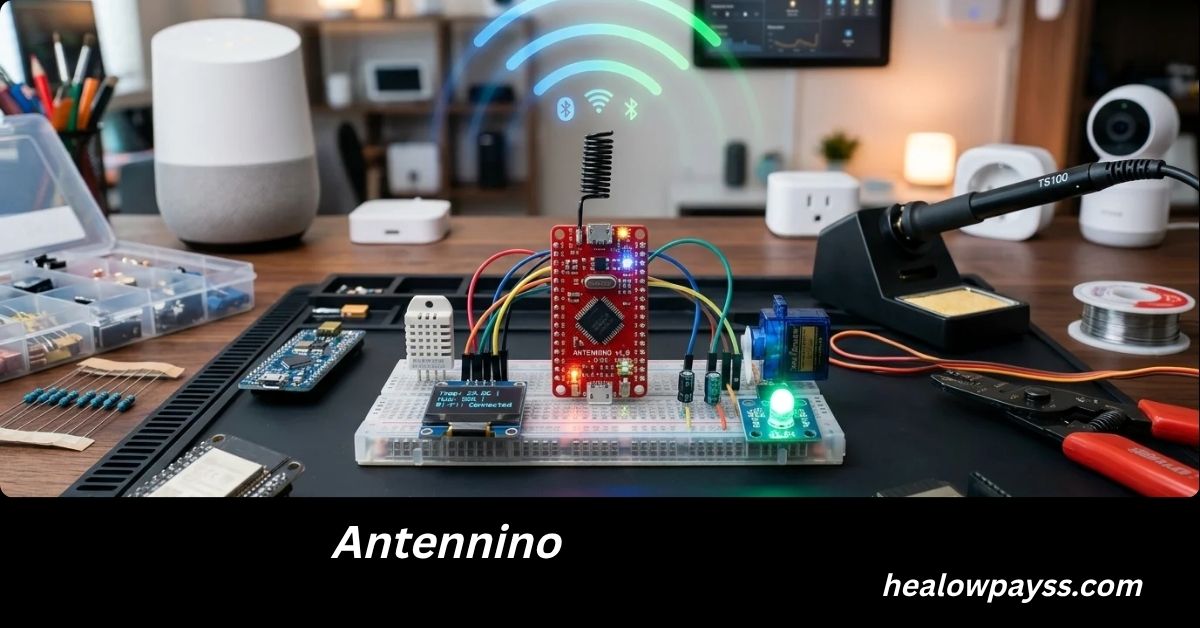
The world of electronics continues to evolve rapidly, bringing smaller, smarter, and more energy-efficient devices into everyday life. Among the many development platforms available today, antennino has gained attention as a practical solution for developers, hobbyists, students, and Internet of Things (IoT) enthusiasts.
Antennino is a combination of the words “antenna” and “Arduino.” It is a low-cost, low-power electronic development board built around an Atmel microcontroller and designed to be fully compatible with the Arduino ecosystem. This compatibility allows users to take advantage of the vast Arduino community, libraries, and programming tools while benefiting from wireless communication features and efficient power consumption.
As smart homes, environmental monitoring systems, wireless sensors, and remote control devices become increasingly common, the demand for affordable and reliable development platforms continues to grow. Antennino fills an important role by offering a balance between performance, simplicity, flexibility, and power efficiency.
In this comprehensive guide, you will learn everything about antennino, including its features, applications, benefits, technical specifications, programming process, future potential, and related concepts such as antennin asennus, chaetomorpha antennina, and nemertesia antennina.
What Is Antennino?
Antennino is an Arduino-compatible wireless development board specifically designed for low-power applications. It is based on an Atmel microcontroller, making it highly compatible with existing Arduino software and hardware resources.
The board was created with a focus on wireless communication, battery-powered operation, and sensor integration. Unlike many larger development boards that consume significant power, antennino is optimized to operate for extended periods while using minimal energy.
This makes it an ideal solution for:
- Wireless sensor networks
- Home automation systems
- Environmental monitoring
- Agricultural technology
- Remote data collection
- Smart city applications
- Internet of Things devices
- Educational electronics projects
One of the major advantages of antennino is its ability to maintain Arduino compatibility while supporting advanced wireless communication capabilities.
The History and Evolution of Antennino
The rise of Arduino revolutionized electronics development by making programming and hardware design accessible to everyone. However, many developers soon discovered a challenge: traditional Arduino boards were not always optimized for wireless and battery-powered applications.
This need inspired the development of specialized boards like antennino.
The concept behind antennino was straightforward:
- Maintain Arduino compatibility
- Reduce power consumption
- Improve wireless communication
- Lower development costs
- Simplify sensor deployment
As IoT technology expanded globally, low-power wireless boards became increasingly important. Antennino emerged as one of the practical solutions for developers seeking reliable wireless connectivity without the complexity of industrial-grade systems.
Today, the principles behind antennino continue to influence many modern IoT platforms.
How Antennino Works
Understanding how antennino operates helps explain why it is useful for wireless applications.
The board consists of several key components:
Microcontroller
The Atmel microcontroller serves as the brain of the system.
It handles:
- Program execution
- Sensor data processing
- Communication tasks
- Power management
- Input and output control
Wireless Module
A wireless transceiver enables communication between devices.
This allows:
- Sensor networks
- Remote monitoring
- Data transmission
- Device-to-device communication
Power Management System
One of the most important features of antennino is its low-power design.
Also Read: How to Take Payments Online: The Complete 2026 Guide for Businesses and
Power-saving features include:
- Sleep modes
- Efficient voltage regulation
- Optimized processor operation
- Battery-friendly communication protocols
Input and Output Pins
Like Arduino boards, antennino includes multiple input and output connections.
These allow users to connect:
- Sensors
- Displays
- Relays
- Motors
- LEDs
- Communication modules
Key Features of Antennino
Several characteristics make antennino attractive for electronics projects.
Arduino Compatibility
Users can program antennino using the familiar Arduino IDE.
Benefits include:
- Easy coding
- Extensive libraries
- Large community support
- Fast project development
Low Power Consumption
Many IoT devices need to run for months or years on batteries.
Antennino is specifically designed for:
- Long battery life
- Reduced energy usage
- Remote deployment
Wireless Communication
Wireless connectivity eliminates the need for extensive wiring.
Advantages include:
- Flexible installation
- Lower maintenance costs
- Improved scalability
Affordable Design
The low-cost nature of antennino makes it suitable for:
- Educational institutions
- Hobby projects
- Research applications
- Startup development
Sensor Integration
Modern sensor technology works effectively with antennino.
Common sensor types include:
- Temperature sensors
- Humidity sensors
- Light sensors
- Motion sensors
- Pressure sensors
- Air quality sensors
Why Antennino Matters in the IoT Era
The Internet of Things continues transforming industries around the world.
Millions of devices now collect and exchange data automatically.
Examples include:
- Smart thermostats
- Agricultural monitoring systems
- Industrial automation equipment
- Health monitoring devices
- Environmental stations
Antennino contributes to this ecosystem by making wireless sensor deployment easier and more affordable.
Its combination of:
- Low cost
- Wireless communication
- Arduino compatibility
- Energy efficiency
makes it highly relevant in modern IoT development.
Major Applications of Antennino
Smart Home Automation
Smart homes rely on connected devices.
Antennino can control:
- Lighting systems
- Security sensors
- Climate control
- Energy monitoring
Homeowners benefit from increased convenience and reduced energy costs.
Environmental Monitoring
Environmental data collection often requires remote sensors.
Antennino can monitor:
- Temperature
- Humidity
- Rainfall
- Air quality
- Soil conditions
Researchers can gather valuable data with minimal maintenance.
Agriculture and Farming
Modern agriculture increasingly depends on technology.
Farmers use wireless sensors to monitor:
- Soil moisture
- Weather conditions
- Crop health
- Irrigation systems
Antennino enables efficient agricultural management while reducing resource waste.
Also Read: How to Online Bill Payment: The Paying Bills Online Safely and Easily
Industrial Monitoring
Factories and manufacturing facilities use sensors to improve efficiency.
Applications include:
- Equipment monitoring
- Predictive maintenance
- Energy management
- Process automation
Antennino supports cost-effective monitoring solutions.
Educational Projects
Schools and universities frequently use Arduino-compatible platforms.
Antennino helps students learn:
- Programming
- Electronics
- Wireless networking
- Embedded systems
Its affordability makes it accessible for classroom environments.
Antennino vs Traditional Arduino Boards
Many people wonder how antennino differs from standard Arduino boards.
Power Consumption
Traditional Arduino boards often consume more power.
Antennino focuses on:
- Energy efficiency
- Sleep functionality
- Battery optimization
Wireless Features
Many standard Arduino boards require additional communication modules.
Antennino integrates wireless capabilities more directly.
IoT Readiness
Antennino is designed specifically for connected devices.
This provides advantages for:
- Sensor networks
- Remote monitoring
- Smart systems
Deployment Flexibility
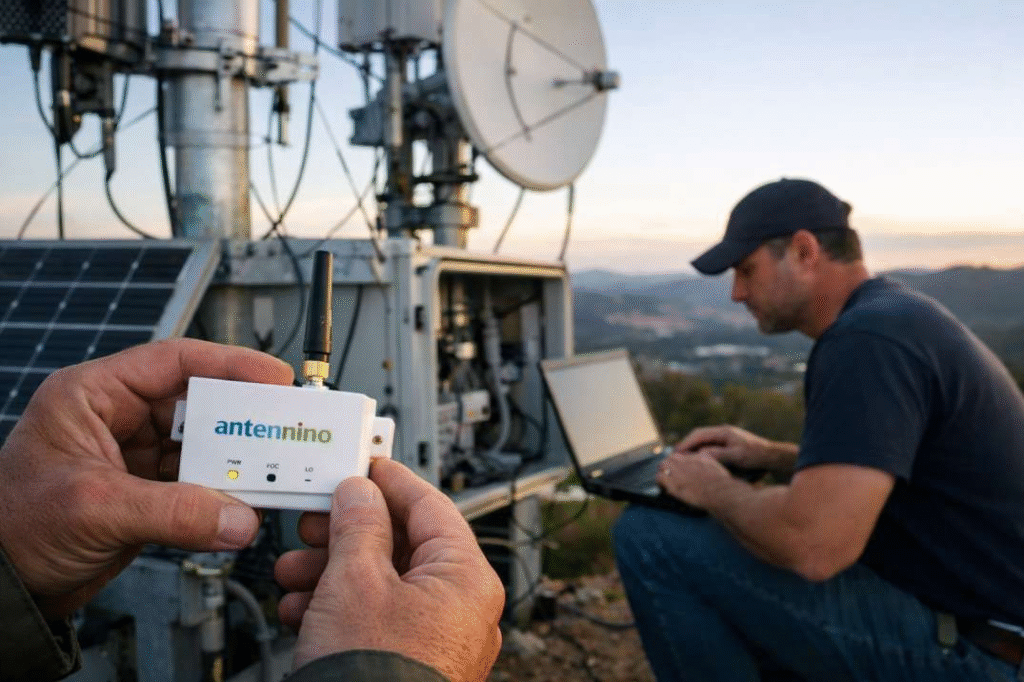
Because of its wireless nature, antennino can be installed in locations where wired connections are difficult or expensive.
Programming Antennino
One of the most appealing aspects of antennino is its ease of programming.
Developers typically use the Arduino Integrated Development Environment (IDE).
The process involves:
Step 1: Install Arduino IDE
Download and install the Arduino software.
Step 2: Configure Board Settings
Select the appropriate board configuration.
Step 3: Write Code
Develop your application using standard Arduino syntax.
Step 4: Upload Program
Transfer the code to the board.
Step 5: Test and Deploy
Verify functionality before final deployment.
Because of Arduino compatibility, existing code often requires only minor modifications.
Benefits of Using Antennino
Developers choose antennino for several reasons.
Reduced Development Costs
The platform minimizes hardware expenses.
Faster Prototyping
Projects can move from concept to testing quickly.
Community Support
Arduino compatibility provides access to extensive learning resources.
Long Battery Life
Low-power operation reduces maintenance requirements.
Scalability
Multiple devices can work together within larger sensor networks.
Understanding Antennin Asennus
The keyword antennin asennus is a Finnish term that translates roughly to “antenna installation.”
Although antennino itself is a development board, proper antenna installation remains an important aspect of wireless communication.
Effective antennin asennus principles include:
- Correct antenna positioning
- Avoiding physical obstructions
- Minimizing interference
- Choosing appropriate antenna types
- Maintaining secure connections
Wireless performance often depends as much on antenna placement as on the hardware itself.
Chaetomorpha Antennina and Nemertesia Antennina Explained
Some users searching for antennino also encounter biological terms such as chaetomorpha antennina and nemertesia antennina.
These terms belong to marine biology rather than electronics.
Chaetomorpha Antennina
Chaetomorpha antennina is a species of green algae found in marine environments.
Researchers study it for:
- Ecological importance
- Marine biodiversity
- Coastal ecosystem health
Nemertesia Antennina
Nemertesia antennina is a hydrozoan species commonly found in ocean habitats.
Scientists examine it for:
- Marine ecology
- Species interactions
- Ocean biodiversity research
Although these organisms share the word “antennina,” they are unrelated to antennino electronics technology.
The Future of Antennino
The future looks promising for low-power wireless development platforms.
Several trends support continued interest in antennino-like solutions:
- Growth of smart cities
- Expansion of IoT devices
- Increased environmental monitoring
- Precision agriculture adoption
- Industrial digital transformation
As technology advances, future versions may offer:
Also Read: Does Square Take Online Payments? Complete Guide for Businesses in 2026
- Improved wireless range
- Enhanced security
- Greater processing power
- Lower energy consumption
- Better cloud integration
These improvements could further expand the role of antennino in connected systems.
Frequently Asked Questions About Antennino
Is antennino the same as Arduino?
No. Antennino is an Arduino-compatible board but includes features specifically focused on wireless communication and low-power operation.
Can beginners use antennino?
Yes. Anyone familiar with Arduino can learn antennino relatively quickly.
What makes antennino suitable for IoT projects?
Its low power consumption, wireless communication capabilities, and Arduino compatibility make it ideal for IoT development.
Does antennino require internet access?
Not always. It can operate in local wireless networks and sensor systems without direct internet connectivity.
Can antennino run on batteries?
Yes. One of its primary advantages is efficient battery-powered operation.
Is antennino useful for commercial projects?
Yes. Many developers use similar low-power platforms in commercial and industrial applications.
What programming language does antennino use?
Most projects use Arduino-style C/C++ programming through the Arduino IDE.
Can multiple antennino boards communicate together?
Yes. Wireless networking capabilities allow multiple devices to exchange information.
Is antennino suitable for outdoor monitoring systems?
Yes. When housed in weather-resistant enclosures, it can support outdoor sensor applications.
What industries benefit most from antennino?
Agriculture, environmental science, education, manufacturing, smart home technology, and IoT development all benefit from antennino-based solutions.
Conclusion
Antennino represents an important step in the evolution of low-power wireless electronics. By combining Arduino compatibility with efficient wireless communication and energy-saving design, it provides developers with a practical platform for building modern IoT solutions. Whether used in smart homes, agriculture, environmental monitoring, industrial systems, or educational projects, antennino offers a balance of affordability, flexibility, and performance that continues to attract attention in the technology community.
As connected devices become increasingly common, the principles behind antennino will remain highly relevant. Its emphasis on accessibility, wireless communication, and low-power operation aligns perfectly with the future of IoT innovation, making it a valuable tool for both beginners and experienced developers.
